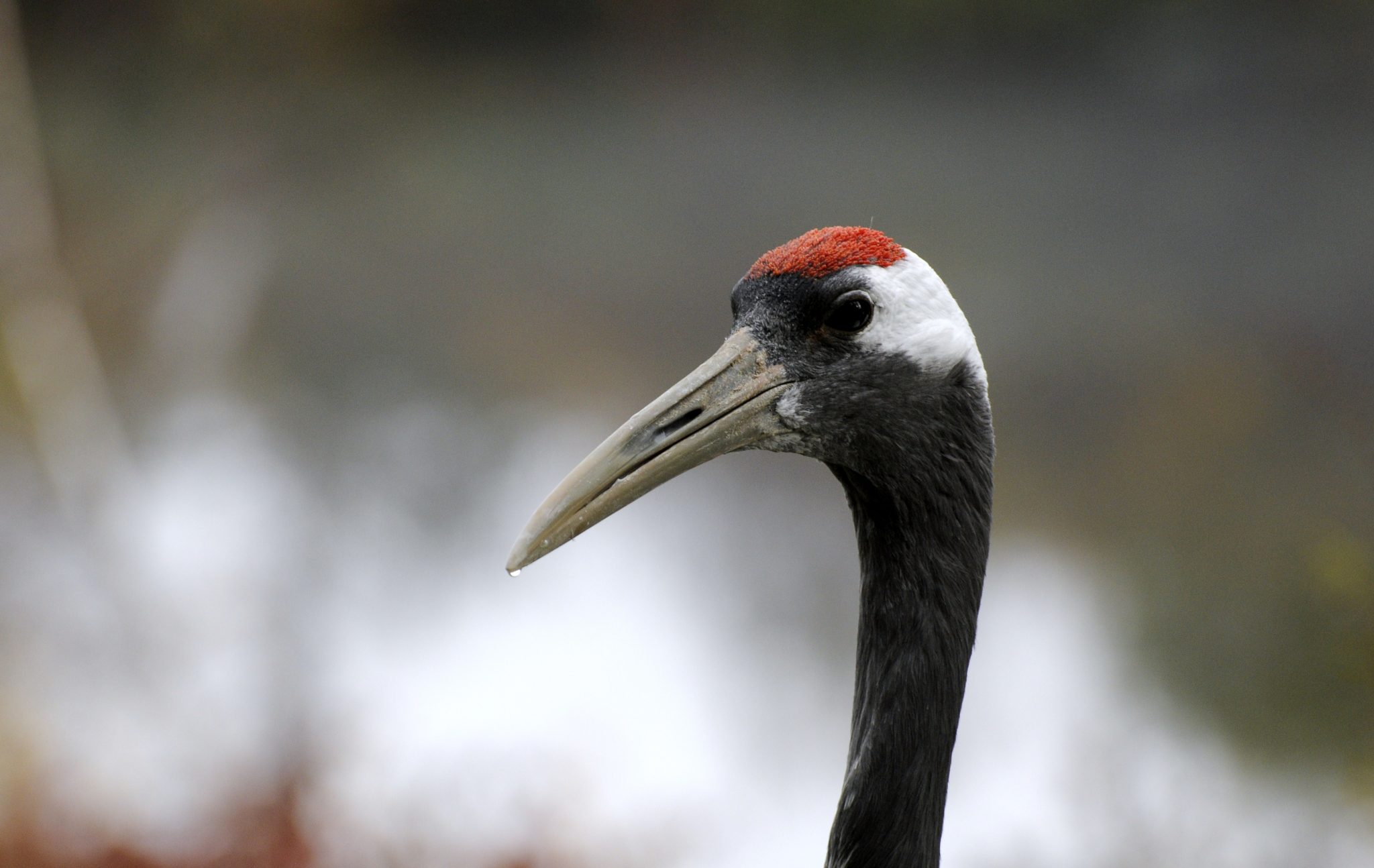
Red-crowned crane
Grus japonensis
Red-crowned crane couples are monogamous. In Asian culture, it is a symbol of love and faithfulness. You often find it depicted in Japanese art. The species is also associated with longevity, and even eternity, as it can live for dozens of years.

Reproduction
It nests and lays its eggs in spring and summer, once the male and female have reached the age of 2 ½. The couple incubates and protects 2 eggs for 29-34 days. Generally only one nestling survives. The youngsters fledge 75-95 days after hatching.

Alimentation
This omnivorous bird has a varied diet: insects, aquatic invertebrates, fish, amphibians, rodents, reeds or rushes, grass, corn, berries and other plant forms.

Prédateurs
Few predators, since the crane takes flight rapidly and defends itself with its sharp-edged beak. Human beings remain its major predator.

Longévité
In the wild, from 30 years; in captivity, from 50 to 60 years.
Asie Orientale